
Dental implants
An implant can replace a missing tooth. Whether this is possible for you is assessed individually after an examination.
What is a dental implant?
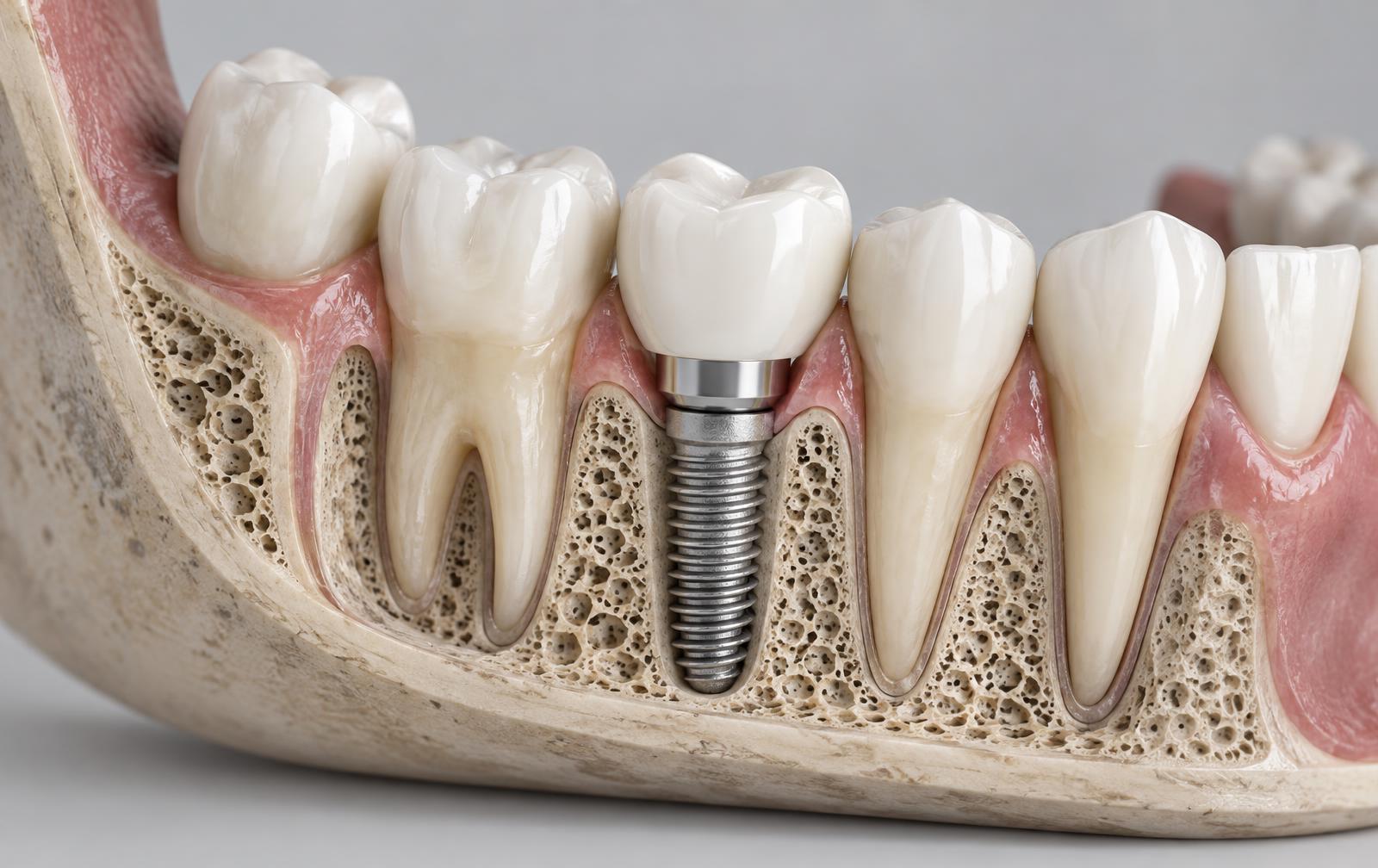
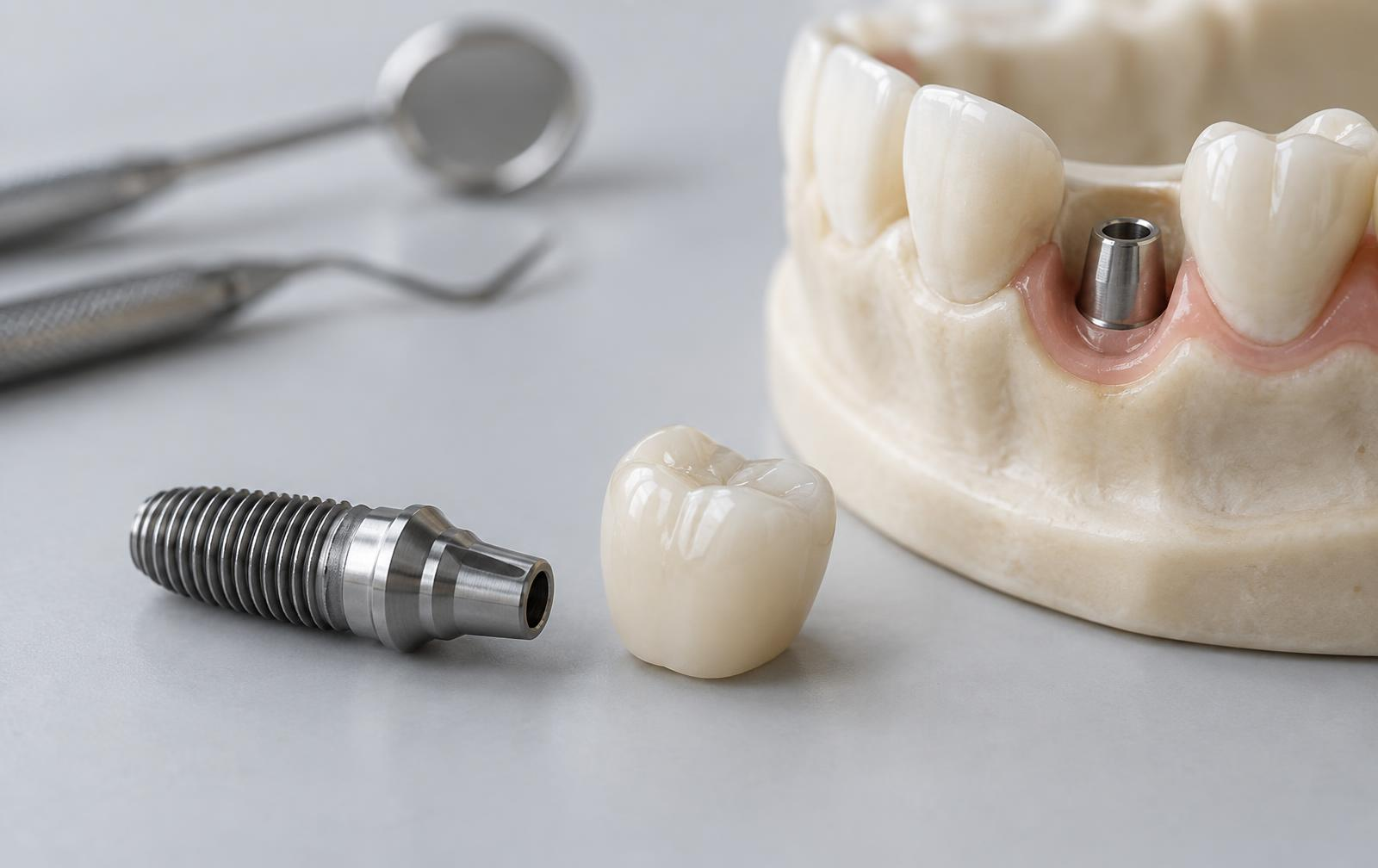
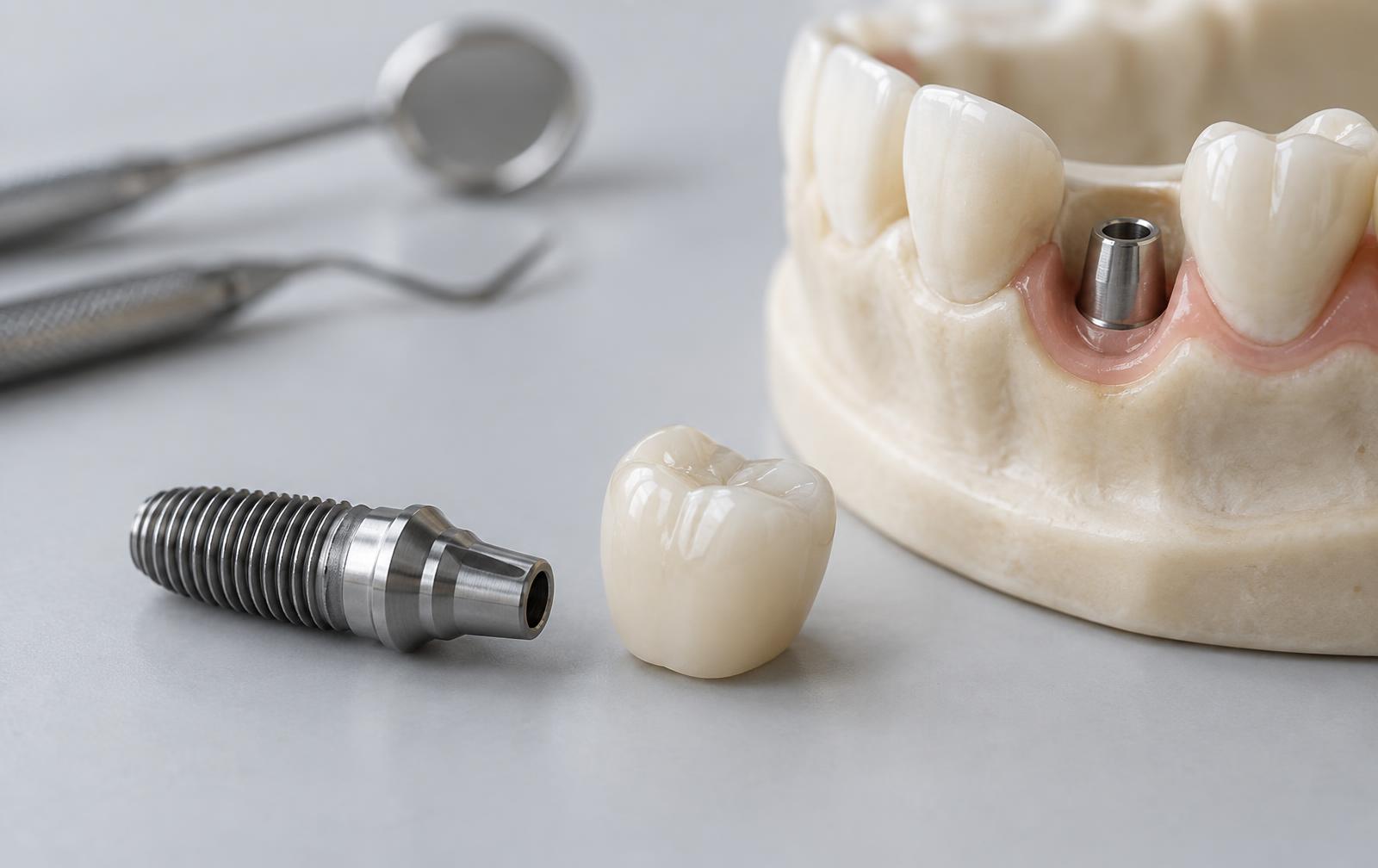
A dental implant is an artificial root, usually made of titanium, placed in the jawbone. It replaces the lost tooth root and supports an abutment and then a crown, bridge or denture.
An implant is self-supporting. This usually means neighbouring teeth do not need to be prepared, unlike with a conventional bridge.
Can a tooth root be replaced by an implant?
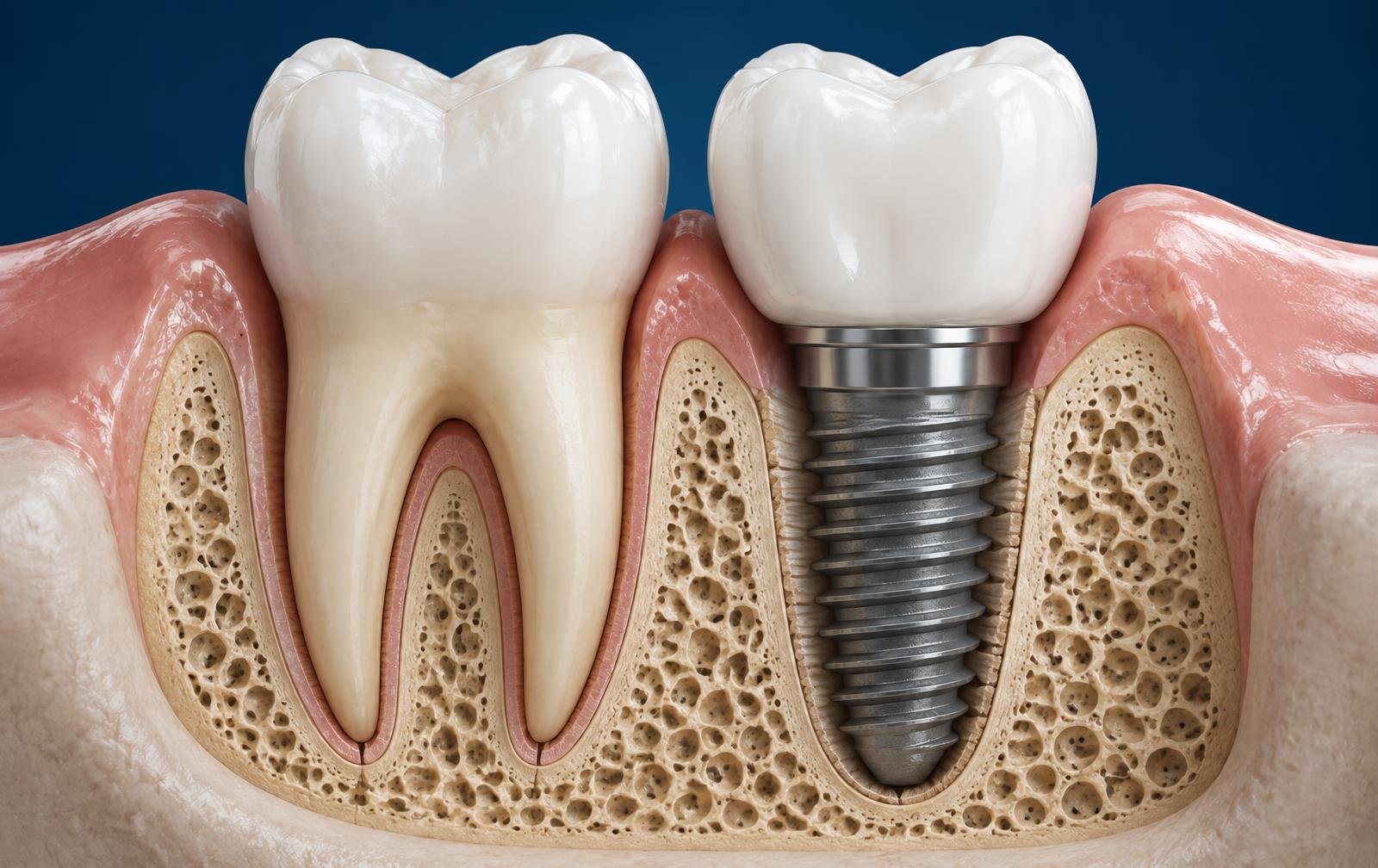
Yes, a dental implant is essentially an artificial replacement for a tooth root. After the natural tooth (root) is removed, a titanium screw is placed in the jawbone to take over that role. An abutment and then a crown, bridge or denture is fitted on top.
Whether a root should or can be replaced is always assessed individually. Sometimes a root canal treatment or another solution is more appropriate. An implant is only considered when the tooth cannot be retained.
Why replace a missing tooth?
A gap can affect more than appearance. Teeth may shift or tilt, the opposing tooth may over-erupt, chewing can become more difficult and the jawbone may gradually reduce.
We always discuss whether replacement is useful in your situation. Sometimes monitoring or another solution is equally appropriate.
When can an implant be considered?
An implant may be considered when one or more teeth are missing or cannot be retained. The most suitable approach depends on your teeth, wishes and treatment plan.
- One missing tooth: a single implant with a crown.
- Several missing teeth: implants supporting a bridge.
- A fully edentulous jaw: a denture attached to implants.
How do we assess whether it is possible?
Suitability is always assessed individually. Bone volume, general and oral health, and oral hygiene can influence whether implant treatment is possible or advisable.
This can only be assessed after a clinical examination and the necessary imaging. We then discuss the options and alternatives with you.
Digital planning with CBCT and a 3D scan
For implantology we use three-dimensional imaging. A CBCT scan lets us assess bone volume and important structures such as nerves and the sinus.
We combine this image with a digital scan of your teeth to plan the implant position carefully before treatment.
How does treatment proceed?
The duration varies considerably by situation and treatment plan. We provide a realistic estimate for your individual path.
- 1Examination, CBCT imaging and a digital scan.
- 2A treatment plan with a quotation.
- 3Placement of the implant, usually under local anaesthetic.
- 4A healing period during which the implant can integrate with the bone.
- 5A scan and placement of the crown, bridge or denture.
- 6Checks and continued follow-up.
After the procedure
Swelling, sensitivity or bruising may occur. You receive clear instructions about pain relief, eating, drinking, brushing and rinsing. Contact us if recovery does not proceed as expected.
Aftercare and points to consider
As with any procedure, risks exist and results cannot be guaranteed. Good oral hygiene and regular checks are important for long-term maintenance. Smoking and certain conditions can affect healing.
Plaque can cause inflammation around an implant, so good home care and regular professional cleaning remain important.
Who guides this treatment?

Escolano Palacios Antonio
Master in Oral Surgery and Implantology + Postgraduate degree in Oral Rehabilitation and Prosthodontics
Frequently asked questions
- How do I know whether an implant is possible?
- This is assessed individually after examination and imaging. Bone volume, general health, oral health and oral hygiene can all play a role in whether an implant is possible or advisable.
- How long does an implant treatment take?
- The duration differs per situation and treatment plan. After the examination we give you an estimate for your own treatment.
- What does an implant cost?
- For implants a quote is prepared based on your treatment plan. For extensive work you receive it in advance.
- Are you conventioned?
- No, Mondzorg Noord & Zuid is non-conventional. For extensive treatment plans we prepare a clear quote in advance.
From tooth to implant — see it yourself
Hover over the middle tooth or tap it
For implant treatments we work with MegaGen implants: titanium implants that are placed in the jawbone as an artificial root. An abutment and a ceramic crown are placed on top, so the result looks and feels like a natural tooth.
Related treatments
Questions about dental implants? We will be happy to discuss them with you.
Book your appointment